
AI adoption is skyrocketing across UK industries, but beneath the headlines and tech showcases, one crucial question keeps resurfacing: Is your business genuinely maximising its AI advantage—or just skimming the surface due to gaps in leadership vision and strategy?
Let’s dive into where companies are succeeding, where they’re stalling, and, most importantly, what effective leadership in the AI era really looks like.
How Far Has AI Really Come? The 2025 Reality
AI went from hype to necessity in record time. This year, a staggering 72% of companies are actively deploying some form of artificial intelligence—a sharp rise from 55% the year before (source: McKinsey, 2025). What’s fuelling this? The AI market’s growth rate is relentless, compounding at around 37% annually, with nearly every forward-thinking executive placing AI at the very top of the business agenda.
But, despite these impressive numbers, not all businesses are reaping the rewards at the same pace or scale. So, what separates the true winners from the rest?
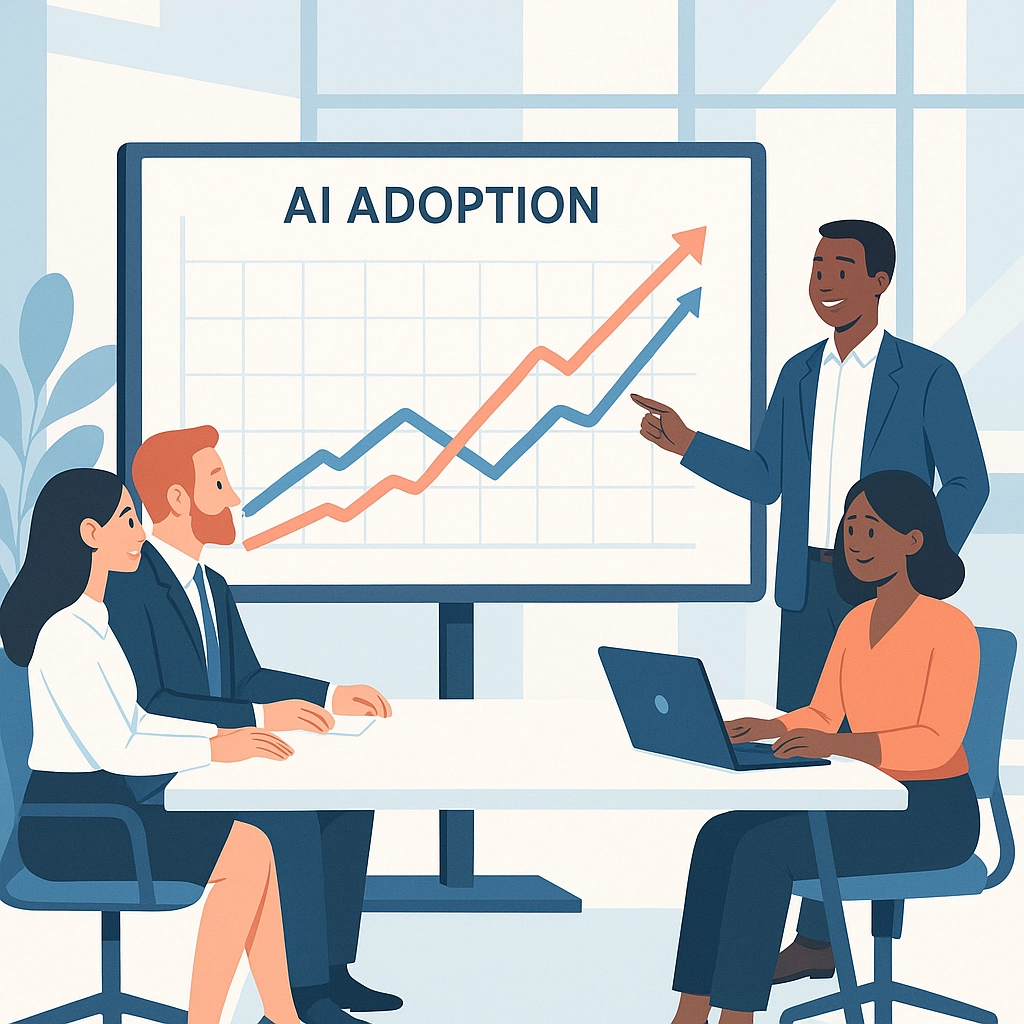
Why Leadership, Not Tech, Is the Real AI Game Changer
Adopting AI isn’t just about plugging in new software or upgrading infrastructure. Genuine business transformation always begins at the top.
Evidence at a Glance
- 83% of leaders now rank AI as a top business priority (PwC, 2025)
- £12tn to £17tn: Projected global boost to GDP from AI by 2030 (Accenture, 2025)
- 97 million new AI-related roles expected by 2025, requiring proactive leadership in workforce transition (World Economic Forum)
It’s leadership that writes the playbook for how technology augments teams, reshapes products, and delivers fresh value to customers. Without clear direction, even best-in-class AI tools risk gathering dust.
What Does Good AI Leadership Actually Look Like?
1. Direct Involvement from the Top
Successful AI projects almost always feature direct CEO engagement. Whether it’s a technically-savvy leader rolling up their sleeves to experiment with new workflows, or a non-technical chief driving change narratives and empowering teams, CEO visibility and intent are essential.
This shouldn’t be confused with micromanagement. Rather, it’s about active participation: asking the right questions, challenging entrenched thinking, and demonstrating an authentic commitment to continuous learning and adaptation.
2. Building Distributed Leadership Teams
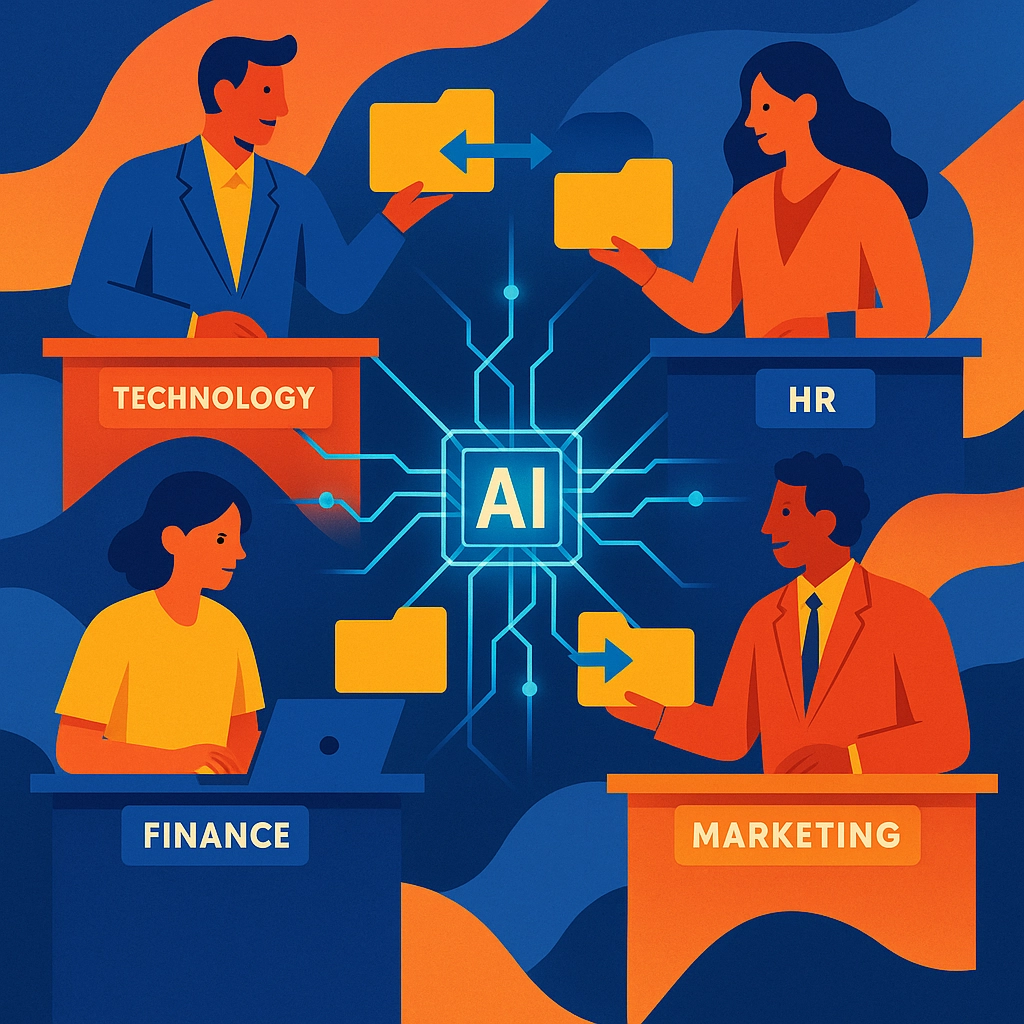
AI breaks silos by nature, so leadership should too. No single “AI leader” can single-handedly deliver transformation. Instead, high-performing organisations foster distributed leadership:
- Technology Leads & Engineers: Experiment with generative models, automation, and predictive analytics
- Operations & HR Directors: Redesign workflows, job roles, and customer journeys to make the most of new capabilities
- Finance and Risk Heads: Ensure investments align with business objectives and risk is managed responsibly
- Marketing & Customer Experience: Leverage AI for deeper customer insights, personalisation, and agile service delivery
This distributed approach ensures AI is not just an ‘IT project’ but a core driver of business performance.

FAQs: Leadership and AI Adoption
Q: Do You Need a Chief AI Officer?
Some organisations benefit from a dedicated AI champion to set initial direction and standards. But for sustainable AI adoption, true buy-in and responsibility must spread across the senior leadership team—and be modelled at every departmental level.
Q: Which Industries Are Leading in AI—and Why?
- Banking and Financial Services: For fraud detection, risk management, and algorithmic trading.
- Healthcare: Radiology, diagnostics, treatment pathways, and patient engagement.
- Retail and E-Commerce: Dynamic pricing, personalisation, and logistics optimisation.
- Manufacturing: Predictive maintenance, supply chain automation, and digital twins.
- Media & Telecoms: Network planning, content recommendations, and subscriber analytics.
These sectors share two things: vast data resources, and a culture of continuous leadership innovation.
Creating an AI-Ready Culture: Not Just a Tech Exercise
Encouraging Growth Mindsets
Change doesn’t stick unless leaders embody and encourage curiosity, experimentation, and learning. Teams need psychological safety to try, fail, learn, and iterate—without fear of reprisal or reputational damage.
Clarity of Purpose (and Communicating It Well)
Why are you investing in AI? Leaders must connect AI projects to clear, urgent business objectives—improving efficiency, reducing costs, enhancing customer experience, accelerating innovation. Clear communication keeps teams aligned, motivated, and resilient through inevitable challenges.
Ethics, Accountability, and Trust
Employees and stakeholders want to know that AI is used responsibly. Clear standards around transparency, data use, algorithmic fairness, and governance are vital. Leaders need to champion ethical frameworks, demonstrate accountability, and invite constructive scrutiny.
From Buzzwords to Business Value: Leadership Lessons from the Field
- Business 1 (Healthcare): Implemented AI to streamline patient diagnostics. Leadership established a cross-functional task force directed by both the CIO and medical director, delivering faster adoption and far greater clinician buy-in.
- Business 2 (Retail): Launched a data-driven personalisation engine. The CEO led townhalls explaining both the risks and upside, boosting frontline staff engagement and reducing resistance to new ways of working.
- Business 3 (Manufacturing): Introduced predictive maintenance with AI sensors. Operations and technology VPs jointly ran the programme, linking improved uptime directly to business performance metrics.
For more real-world examples of part-time and fractional executive leadership in action, check out our deeper dives:
- Transformative Leadership on Tap: The Real-World Impact of Part-Time Directors
- AI Uncertainty and the Need for Speed: Why SMEs Are Embracing Fractional Executives
Key Signs You’re Not Getting Full Value from AI—And What To Do About It
Common Warning Signs
- AI investments fail to move key business metrics or show tangible ROI
- IT or innovation teams work in isolation from operations, finance, or HR
- Senior leaders delegate all ‘AI responsibility’ to one function or individual
- Employees are confused, anxious, or sceptical about the company’s direction
- Projects stall due to risk aversion or lack of business alignment
What’s Next? What Great AI Leadership Looks Like
- Set a Vision, Not a Buzzword: Frame AI adoption as a way to unlock new value—not just automate old processes.
- Model the Change: Senior leaders must ‘walk the talk,’ sharing experiments and lessons openly.
- Multiply Leadership: Build cross-functional teams with a shared sense of purpose, not just stand-alone departments.
- Measure and Communicate Impact: Establish clear metrics around customer outcomes, workforce empowerment, and efficiency—not just implementation milestones.
- Maintain High Standards: Insist on responsible, ethical, and transparent use of AI at each stage.
Essential Moves for Businesses Ready to Lead with AI
- Run an AI Leadership Audit: How actively are your board and C-suite engaging in AI strategy?
- Invest in Upskilling Across Your Leadership Team: Integrate AI education and experimentation across roles.
- Prioritise Partnerships and Flexible Talent: Bring in fractional or interim directors with hands-on AI expertise, as needed (learn more here).
- Continuous Learning: Make space for trial, error, iteration—and celebrate outcomes, not just inputs.

Resources & Further Reading
- Digital Transformation Consultancy Services
- IT Leadership & Advisory
- CIO and AI-Readiness Audit Services
- McKinsey (2025): “State of AI Adoption 2025”
- World Economic Forum: “The Future of Jobs Report 2025”
- Accenture: “AI and the UK Economy”
- YouTube: Why Most AI Projects Fail — And How Leadership Can Fix It
- AI Uncertainty and the Need for Speed (Leadership Services Insights)
AI is rewriting the rules of competition, but only visionary and action-oriented leadership will ensure your organisation seizes its full value. Wondering about the next step? Talk to our team about scaling your leadership for the age of AI.