
How to Build an Advisory Board for Your UK SME
Last updated: 26 April 2026
An advisory board UK SME structure gives your business external strategic expertise and independent challenge without the legal liability or cost of a full board of directors. For UK SMEs between roughly £1 million and £30 million revenue, the right advisory board can sharpen strategy, open doors, and surface blind spots for an annual investment of £15,000 to £60,000. Done well, it is the single most cost-effective governance step a founder or owner-manager can take in the years before a permanent non-executive director or formal board structure becomes appropriate.
What is an advisory board UK SME structure?
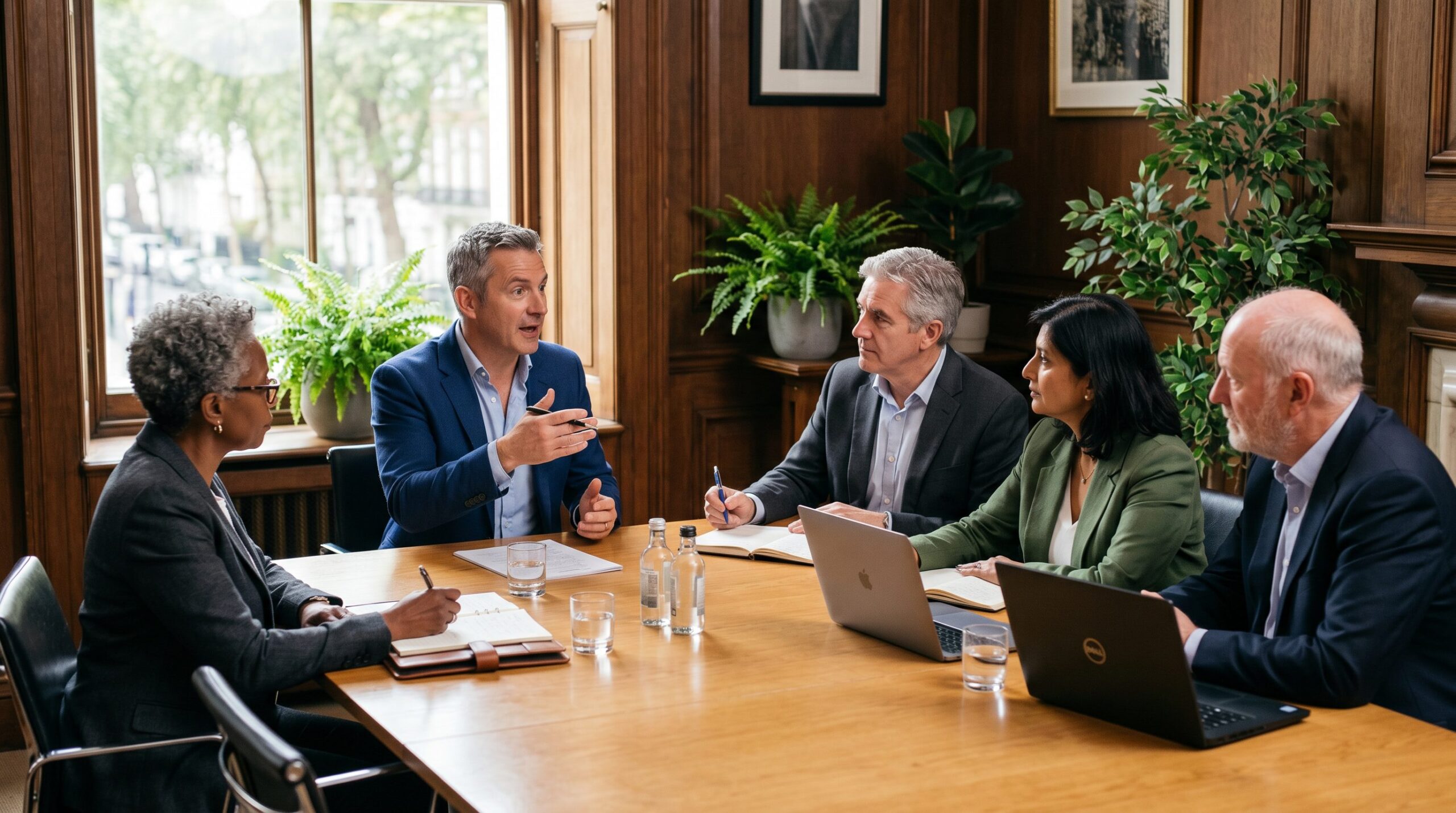
An advisory board is a small group of external experts — typically three to five people — who meet quarterly with your leadership team to advise on strategy, growth, and major decisions. Unlike a board of directors, advisors have no voting rights, no fiduciary duties, and no legal liability under the Companies Act 2006. They observe, challenge, and inform. They keep their noses in but their fingers out.
For UK SMEs, the advisory board model is deliberately flexible. It can be set up in weeks rather than months, dismantled cleanly when it has served its purpose, and shaped around the specific challenges your business is facing. According to Advisory Board Centre data, organisations most commonly establish advisory boards when revenue sits between roughly £1.2 million and £80 million, although readiness matters more than size.
The structure suits owner-managed and founder-led businesses well. It introduces external scrutiny without diluting control, and gives the leadership team a sounding board for conversations they cannot have internally.
Advisory board UK SME vs board of directors vs NED
These three structures are routinely conflated. The differences matter because they carry different legal, financial, and cultural weight.
- Advisory board. External advisors with no voting rights, no fiduciary duties, and no legal liability. Flexible, low-cost, easy to dissolve. Best for SMEs that need expert challenge without formal governance overhead.
- Board of directors. Formal company directors with full statutory duties under the Companies Act 2006, voting rights, and personal legal liability. Best for businesses with external shareholders, complex operations, or imminent transactions.
- Non-executive director (NED). A director-level appointment that sits on a board of directors. Carries the same statutory duties as executive directors. Best when independent governance is required, typically once external investment is in place.
For most UK SMEs without outside shareholders, an advisory board is the right starting point. A formal board with NEDs becomes worth the cost once you take external investment or plan a transaction.
How much does an advisory board UK SME cost?
UK advisory board costs typically fall into a clear range. Individual advisor compensation is usually £1,500 to £3,000 per meeting (typically four to six meetings a year, each including preparation and follow-up), or an annual retainer of £8,000 to £15,000 for ongoing involvement. The independent chair, where you appoint one, commands a premium of 1.5 to 2 times a standard advisor’s fee, reflecting the additional responsibility and time.
For a typical four-person UK SME advisory board with quarterly meetings, total annual investment is £15,000 to £30,000 at the lower end and £40,000 to £60,000 at the upper end, including expenses, secretarial costs, and any sub-committee or ad-hoc work. The Advisory Board Centre’s industry research places the typical organisational investment between roughly £30,000 and £60,000 per year.
Equity-based compensation is common at pre-seed and seed stage, with each advisor typically receiving 0.25 to 1.0 per cent of the company, vesting over two to four years. Hybrid models — equity plus a small per-meeting fee or expense allowance — emerge as the business matures. Pure pro-bono arrangements exist, but should still cover advisor expenses to maintain a professional relationship.
When to set up an advisory board UK SME structure
The trigger is rarely a single event. The following signs typically arrive in clusters:
- You have outgrown the founder’s network. The early-stage advice that came from friends, family, and your accountant is no longer sufficient for the decisions you are now making.
- You are entering a new market, sector, or geography. External experience compresses the learning curve dramatically, often saving six to twelve months of trial and error.
- Your leadership team lacks specific expertise. Common gaps include international expansion, technology strategy, regulated-industry experience, or scale-up operations.
- You are planning a significant transaction in two to three years. Investors, acquirers, and lenders look favourably on businesses with external advisory governance well in advance of any deal.
- You are isolated as a founder or CEO. Running an SME at the top is lonely. An advisory board provides confidential strategic conversations you cannot have with your team.
- Your business has reached around £1 million to £3 million revenue. The point at which the founder can no longer hold every function in their head is the natural moment to bring in external perspective.
If two or more of these apply, the cost of delay typically exceeds the advisory board investment within a year.
How to build an effective advisory board UK SME structure
The following six-step process separates effective UK advisory boards from the ones that drift into irrelevance:
- Define the purpose first. Write a one-page brief covering the specific business challenges the board exists to address, the outcomes you expect over the next 12 to 24 months, and what the board explicitly is not there to do. Without this, advisory boards inevitably drift into operational territory.
- Recruit an independent chair. The chair is your accountability partner. Appoint them first, before any other advisors, and give them three months to help you shape the rest of the board. The chair sets the tone for everything that follows.
- Select for thinking, not logos. The strongest advisors are chosen for their judgement and curiosity, not the size of the company they last worked at. Aim for cognitive diversity: different backgrounds, sectors, and perspectives.
- Document the relationship. Use a written charter or terms of reference covering purpose, scope, meeting cadence, confidentiality, conflict-of-interest management, fees, and notice period. A two-page advisory agreement is sufficient.
- Run a proper orientation. Before the first formal meeting, spend half a day with each new advisor walking them through the business, the strategy, the numbers, and the specific decisions they will help shape. Advisors who skip orientation rarely add full value.
- Review annually. Conduct a short written review at twelve months — what worked, what did not, who is adding value. The best advisors welcome this. Replace anyone who has stopped contributing; the board is for the business, not for the advisors.
Common UK advisory board mistakes to avoid
The same patterns of failure show up across UK SME advisory boards. Avoid them:
- No clear purpose. The board meets because it exists, not because the business needs it. Within a year, agendas drift and advisors disengage.
- Too many advisors. Beyond five external members, conversations fragment and decisions stall. Three to five is the sweet spot for SMEs.
- Friends-of-the-CEO appointments. Familiar voices feel comfortable but rarely challenge. Independent recruitment, ideally through a curated network, produces better appointments.
- No meeting discipline. Without a proper board pack circulated a week in advance and a clear chair, meetings become rambling rather than decision-focused.
- Accidental shadow directors. If advisors start making operational decisions, they can be deemed shadow directors under Section 251 of the Companies Act 2006, with full director liability. Maintain the boundary rigorously.
- Ambiguous compensation. Verbal handshakes lead to disputes. Document fees, expenses, equity, and notice in writing from day one.
Frequently asked questions
Q: How much does an advisory board UK SME cost per year?
A: Total annual investment for a typical UK SME advisory board is £15,000 to £60,000, depending on size and meeting frequency. Individual advisor fees are usually £1,500 to £3,000 per meeting or £8,000 to £15,000 as an annual retainer, with the chair commanding 1.5 to 2 times a standard advisor fee. Early-stage businesses often use equity grants of 0.25 to 1.0 per cent per advisor in place of cash.
Q: What is the difference between an advisory board and a board of directors in the UK?
A: An advisory board provides external counsel with no voting rights, no fiduciary duties, and no legal liability under the Companies Act 2006. A board of directors is a formal governance body whose members are statutory directors with full legal duties and personal liability. Most UK SMEs use an advisory board first, adding non-executive directors to a formal board only once external investment or transaction planning makes that necessary.
Q: When should a UK SME set up an advisory board?
A: The most common triggers are outgrowing the founder’s existing network, entering a new market or sector, lacking specific expertise in the leadership team, planning a transaction within two to three years, and reaching £1 million to £3 million revenue. If two or more of these apply, an advisory board typically pays for itself within twelve months through better strategic decisions and faster opportunity capture.
Q: How many advisors should a UK SME advisory board have?
A: Three to five external advisors is the sweet spot for most UK SMEs. Three is the minimum for genuine cognitive diversity; beyond five, conversations fragment and decision-making slows. Many businesses start with what practitioners call an Advisory Board of One — a single independent chair — and add advisors over the following six to twelve months once the chair has helped shape the right profile mix.
Ready to set up your advisory board?
Leadership Services provides experienced part-time directors and advisory board members across every function and sector, matched to your stage and challenges. Our directors are available to start within one week, with no long-term tie-ins, and engagements start from £1,795 per month. Book a free consultation today to discuss the right boardroom support for your SME.