TL;DR
An AI readiness assessment is a structured review of whether your business is ready to use AI profitably and safely — covering strategy, data, systems, people, governance and use cases. For UK SMEs and scale-ups it answers three questions before you spend: where AI will genuinely pay back, what has to be fixed first, and what the first 90 days should look like. A good one takes two to four weeks and ends with a costed, prioritised roadmap.
Last updated: 9 November 2026
Demand for an AI readiness assessment has grown because adoption is rising faster than confidence. According to the Office for National Statistics, 30% of UK businesses reported using at least one AI technology in September 2026, rising to 38% of businesses with 10 or more employees and 51% of those with 250 or more. But the ONS also finds adoption is shallow: in its analysis of AI in UK businesses, only around 10% of adopting businesses with 10 or more employees report using AI extensively.
The government's own research explains why. The DSIT AI adoption survey 2026 found that limited AI skills, expertise or knowledge affected 67% of businesses that had adopted AI and 78% of those planning to. Among non-adopters, 65% cited the lack of a clear business case or proven return on investment.
In other words, most businesses are not short of AI tools. They are short of a clear view of where AI fits, what it will return and what needs to change to make it work. That is what an assessment is for.
What an AI readiness assessment covers
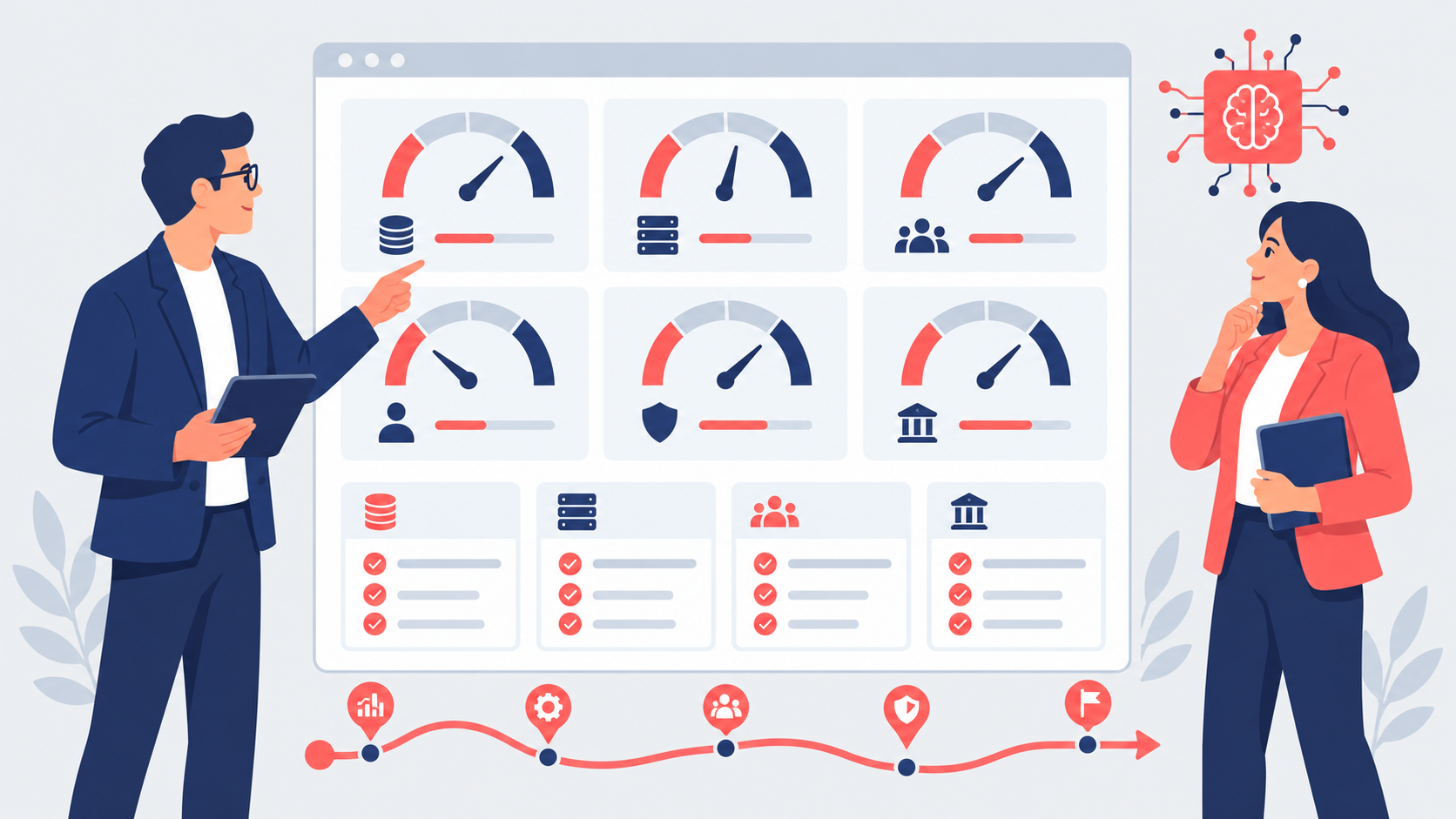
A credible AI readiness assessment looks at six areas and scores each against where the business needs to be:
- Strategy and use cases — which processes, products or customer journeys could AI improve, and what each is worth.
- Data — whether the data those use cases need exists, is accurate, is accessible and is lawfully held.
- Systems and integration — whether core platforms such as ERP, CRM and Microsoft 365 can connect to AI tools securely.
- People and skills — leadership understanding, staff confidence, and who will own and maintain AI in practice.
- Governance and risk — AI policy, data protection, security, supplier risk and any shadow AI already in use.
- Cost and return — realistic implementation effort, licence costs and the payback for each priority use case.
The output should be practical: a scored readiness profile, a shortlist of three to five use cases ranked by value and effort, the fixes needed first, and a costed 90-day plan.
Signs your business needs an AI readiness assessment
- Staff are already using free AI tools, but there is no policy or approved toolset.
- The board keeps asking about AI, but nobody can say what it would return.
- Pilots have started and stalled, or have not moved beyond one enthusiastic team.
- Suppliers are selling AI features and you cannot tell which are worth paying for.
- Data sits in disconnected systems or spreadsheets that nobody fully trusts.
- Customers, insurers or investors are asking how you govern AI.
If several apply, a short assessment is usually cheaper than another round of unplanned pilots. Our guide to shadow AI explains the risk of unmanaged use, and our article on AI strategy consulting costs compares the ways to get senior advice.
How an assessment works in practice
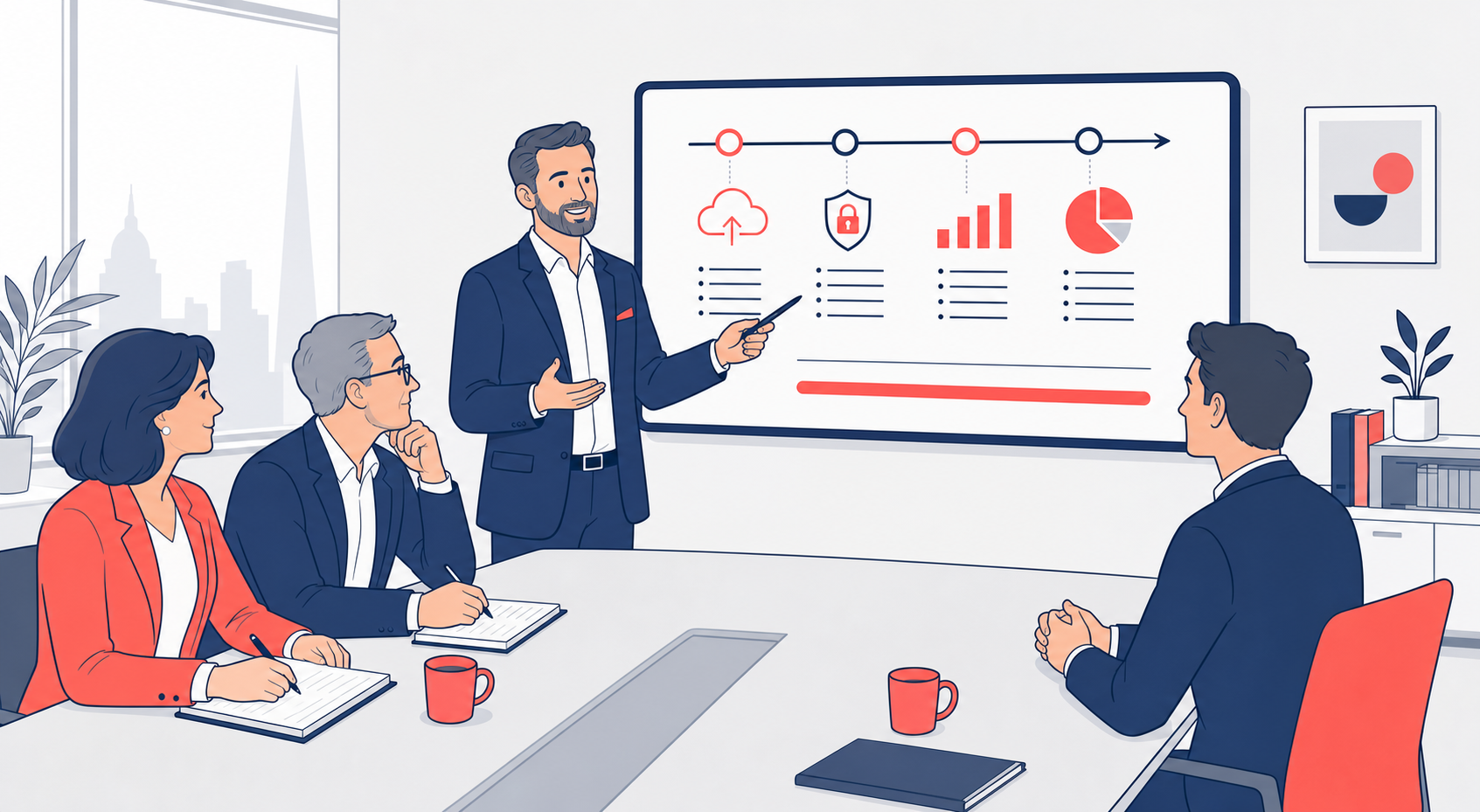
Most AI readiness assessments follow the same rhythm. In the first week, the assessor interviews the leadership team and key process owners and reviews the systems estate and data. In the second and third weeks they map candidate use cases, test data quality on the most promising ones, review policy and security, and estimate effort and return. The final stage is a board presentation with the readiness scores, priority use cases and roadmap.
Picture an 85-person UK distribution business whose MD has been asked by the board for an AI plan. Staff are using free chatbots for emails and quotes, and two software suppliers are pushing AI add-ons. A three-week assessment finds that order data is reliable but product data is inconsistent, introduces an interim AI policy and approved tools, and ranks five use cases. The top two — automated quote preparation and customer service triage — are costed with a payback of under a year, and the product data clean-up becomes the first project. The board gets a plan it can approve, not a list of tools, and the MD has clear answers for the suppliers pushing AI add-ons: which to accept, which to decline and which to revisit once the data is fixed.
Who should carry out your AI readiness assessment?
Independence matters. An assessment led by a software vendor will tend to find a need for that vendor's product. The best assessments are led by a senior technology or data leader who understands both the business and the technology, has delivered AI and automation projects before and has no product to sell.
Leadership Services' Digital & Technology Audit is one of our fixed-fee audits: a board-ready diagnostic that includes AI readiness alongside systems, data and cyber. Where AI is the focus, our AI consultancy team and fractional data and AI directors can run a dedicated assessment and then stay on to lead delivery. Our guide to AI implementation covers what comes next.
Frequently asked questions
What is an AI readiness assessment?
How long does an AI readiness assessment take?
How much does an AI readiness assessment cost?
Do we need good data before assessing AI readiness?
What happens after the assessment?
Ready to find out where AI will pay back?
Leadership Services gives UK SMEs and scale-ups access to a bench of 70+ senior directors, including technology and data leaders who assess AI readiness independently and then help deliver the results. Engagements start from £1,795 per month, begin within one week and have no long-term tie-ins — get in touch and we will respond the same working day.