TL;DR
AI SEO is the work of making your business easy for AI search tools such as Google's AI Overviews, ChatGPT and Microsoft Copilot to find, understand and cite. It builds on traditional SEO, but rewards short direct answers, clear evidence, consistent facts about your company and mentions on other trusted sites. For most UK B2B firms, the first steps are free: fix your service pages, register with Bing Webmaster Tools and publish content that answers buyer questions in plain language.
Last updated: 30 September 2026
AI SEO has moved from a niche topic to a board-level question in about eighteen months. Buyers who used to type a few words into Google and scan ten blue links now ask a full question and read a summary before they click anything, if they click at all.
The scale is hard to ignore. Google says AI Overviews now reach two billion users a month. In the UK, Ofcom's research found that around 30% of Google searches now show an AI overview and more than half of adults say they see AI summaries often, while UK visits to ChatGPT rose from 368 million to 1.8 billion year on year over the first eight months of 2025, as reported from Ofcom's Online Nation study.
For a scale-up that relies on being found by the right finance director, operations lead or founder, that shift changes what good search visibility looks like. This guide explains what has changed, what to do differently and how to decide who should own it.
What is AI SEO and how is it different from traditional SEO?
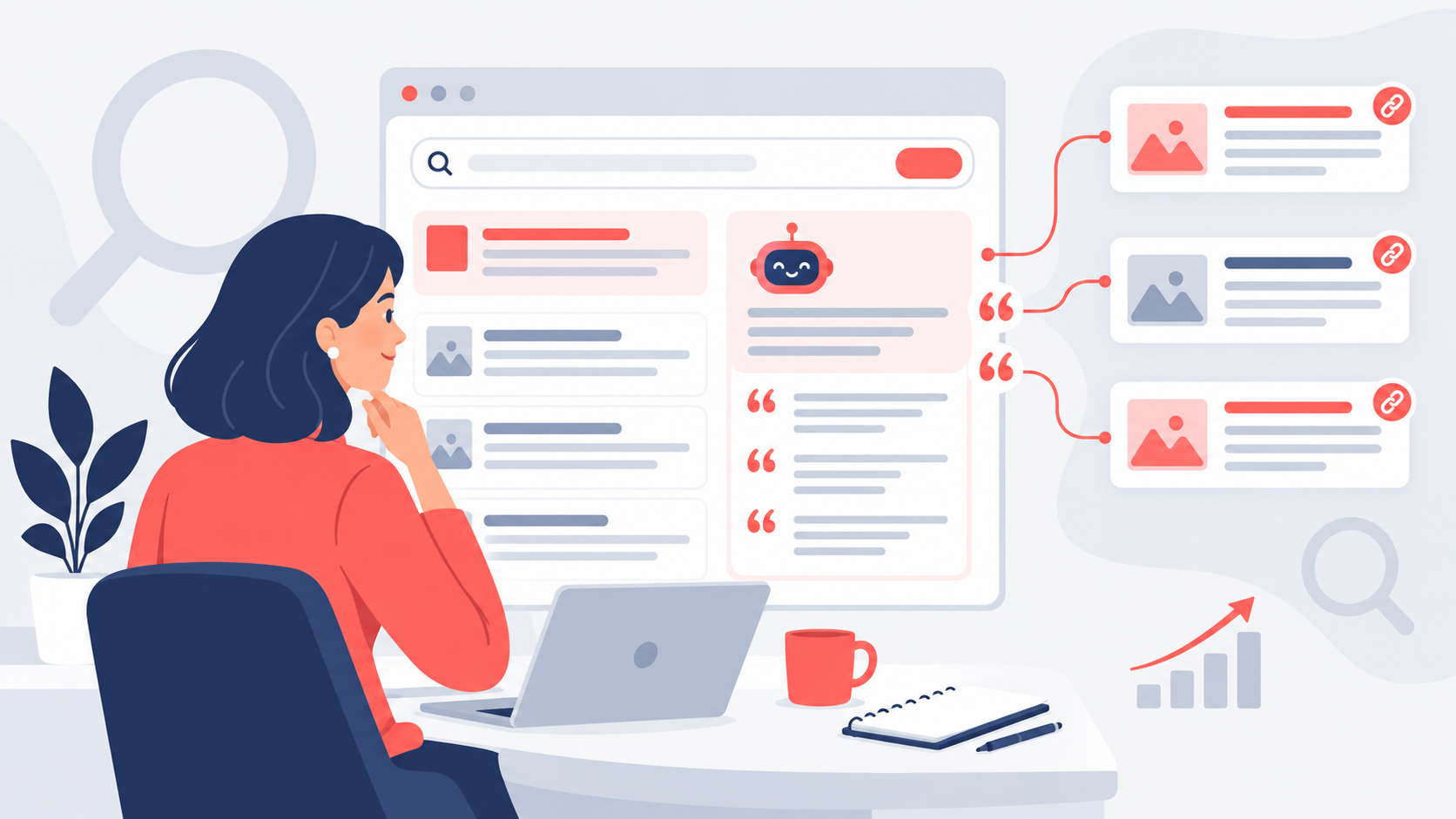
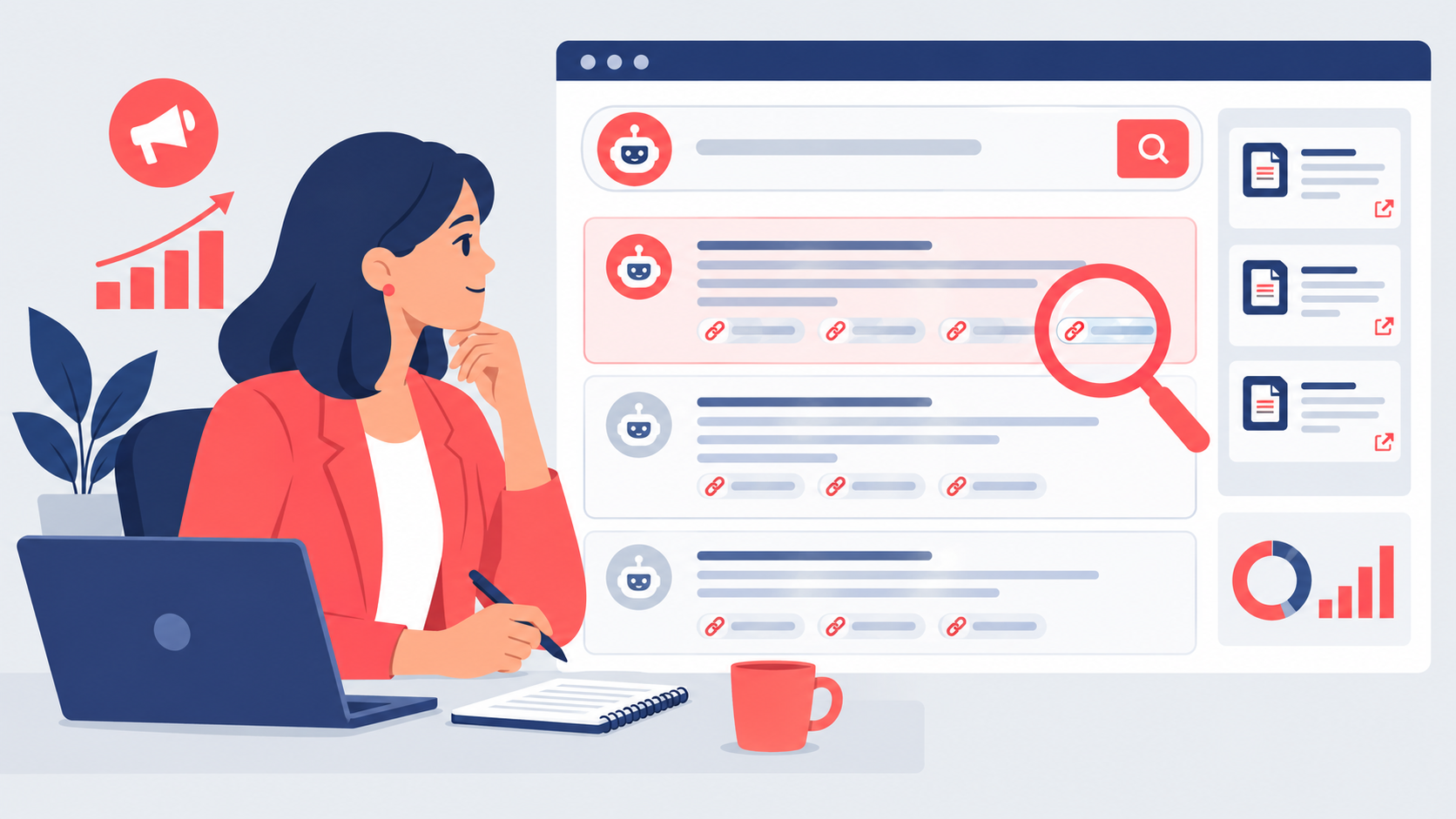
Traditional SEO aims to rank a page as high as possible so that people click through to it. AI SEO, sometimes called AI engine optimisation (AIEO) or generative engine optimisation, aims to have your content selected as a source when an AI tool writes an answer. The AI reads several pages, extracts the facts it trusts, and presents a summary with a handful of citations.
That changes the reward. Pew Research Center tracked the browsing of 900 US adults and found that people clicked a traditional result on 8% of visits where an AI summary appeared, compared with 15% where it did not, and clicked a link inside the summary itself only 1% of the time. Ahrefs' repeat study found AI Overviews cut clicks to the top-ranking page by 58%. Ranking still matters, but being the source the AI quotes matters more.
The foundations are the same: crawlable pages, fast load times, sensible structure and genuine expertise. The difference is emphasis. AI systems favour content that states an answer clearly in the first few lines, backs it with specific numbers, and agrees with what other reputable sites say about you.
Why AI SEO matters for UK scale-ups
B2B buyers are using AI tools for exactly the research that used to start on page one of Google: shortlisting suppliers, comparing costs and checking credibility. If your business is missing from those answers, you are missing from the shortlist.
- Earlier visibility in the buying journey — AI answers often name two or three suppliers before a buyer has visited any website.
- Higher-intent visitors — people who click through from an AI citation have usually already read a summary and arrive with a specific question.
- Protection against falling click-through rates — pages that are cited recover some of the traffic that AI summaries otherwise absorb.
- Credibility by association — being cited alongside respected sources signals that your business is established.
- Reach beyond Google — ChatGPT and Microsoft Copilot draw heavily on Bing's index, which many UK firms have never set up.
- Better content for humans too — clear answers, real prices and plain English convert readers whether they arrive from AI or a link.
What to do differently: a practical AI SEO checklist
Start with the pages that make you money, not the blog. Every service page should open with a two or three sentence answer to the question a buyer is actually asking: what it is, what it costs and how quickly it can start. AI tools lift these summaries almost word for word, so write them to be quoted.
Next, make sure the machines can read you. Register the site with Bing Webmaster Tools as well as Google Search Console, submit your sitemap to both, and use IndexNow so new pages are picked up within hours. Add structured data for your organisation, services and FAQs so the facts about your business are unambiguous.
Then give AI systems evidence. Publish your own numbers — rates, timescales, survey results, case study outcomes — and cite official sources such as ONS or Ofcom for market data. Consolidate overlapping articles so each topic has one strong page rather than five weak ones competing with each other. Finally, earn mentions elsewhere: industry round-ups, trade press, partner websites and consistent directory listings all tell AI tools that other people vouch for you.
Picture a 60-person engineering consultancy that ranks on page two for its core service. After rewriting its service pages with direct answers and published prices, merging a dozen duplicate blog posts and getting listed in two independent supplier round-ups, it starts appearing as a named option when prospects ask Copilot for recommendations — without a single new blog post.
Who should own AI SEO in your business?
AI SEO sits awkwardly between marketing, IT and leadership. Marketing owns the message, IT owns the site and the data, and the board owns the positioning that AI tools will repeat back to buyers. When nobody joins these up, businesses end up with inconsistent prices across pages, outdated directory listings and content that contradicts itself.
When choosing help, look for experience of both search and the underlying technology, evidence of results measured in enquiries rather than rankings alone, transparent pricing and no long-term lock-in. Our guide to becoming AIEO-proof covers the leadership warning signs in more detail, and our AI consultancy service explains how the Leadership Services bench approaches practical AI implementation, including search visibility.
For many scale-ups, the right answer is a senior marketing or data and AI leader working a few days a month who can set the strategy, fix the foundations and hold agencies to account, rather than a full-time hire or another retainer that produces reports instead of pipeline.
Frequently asked questions
Is AI SEO replacing traditional SEO?
How do I know if my business appears in AI search results?
Does Bing really matter for AI SEO in the UK?
How long does AI SEO take to show results?
Do I need an agency for AI SEO?
Ready to make your business visible in AI search?
Leadership Services gives UK scale-ups access to a bench of 500+ senior directors, including marketing, data and AI leaders who can set your AI SEO strategy and fix the foundations quickly. Engagements start from £1,795 per month, begin within one week and have no long-term tie-ins — get in touch today and we will come back to you the same working day.