TL;DR
AI implementation for manufacturing works best when a UK manufacturer starts with one production problem, such as unplanned downtime, scrap, scheduling or slow quoting, proves the gain on a single line, then scales. Most SMEs are still at the pilot stage, and the gap is usually leadership, data and skills rather than technology. Made Smarter can fund up to 50% of eligible hardware and software in England, and a fractional data and AI director can lead the work from £1,795 per month.
Last updated: 25 November 2026
AI implementation for manufacturing has moved from a conference topic to a board agenda item. In Make UK's Investment Monitor 2026, produced with RSM, 41% of manufacturers said AI was an investment priority, up from 27% a year earlier. For the first time, AI sits alongside plant, machinery and skills in the investment plan.
Yet very few factories have got past the trial stage. Make UK's AI, Skills and the Future of the UK Manufacturing Sector report, published in June 2026, found that only 2% of manufacturers have AI widely embedded across their operations. Fewer than 40% use it in some areas, nearly one in five have not adopted it at all, and more than half name skills shortages as the main barrier.
This guide is for MDs and operations directors at growing manufacturers and scale-ups who want results on the shop floor, not another pilot that goes nowhere. It covers where AI pays back first, what implementation involves, how funding works and who should lead it.
What does AI implementation for manufacturing involve?
AI implementation for manufacturing means putting trained models to work on real production, quality, maintenance or commercial decisions, then running them as part of normal operations. That last part matters. A model on a laptop is a trial; implementation means the output reaches the people and systems that act on it, from the shift supervisor's screen to the ERP schedule.
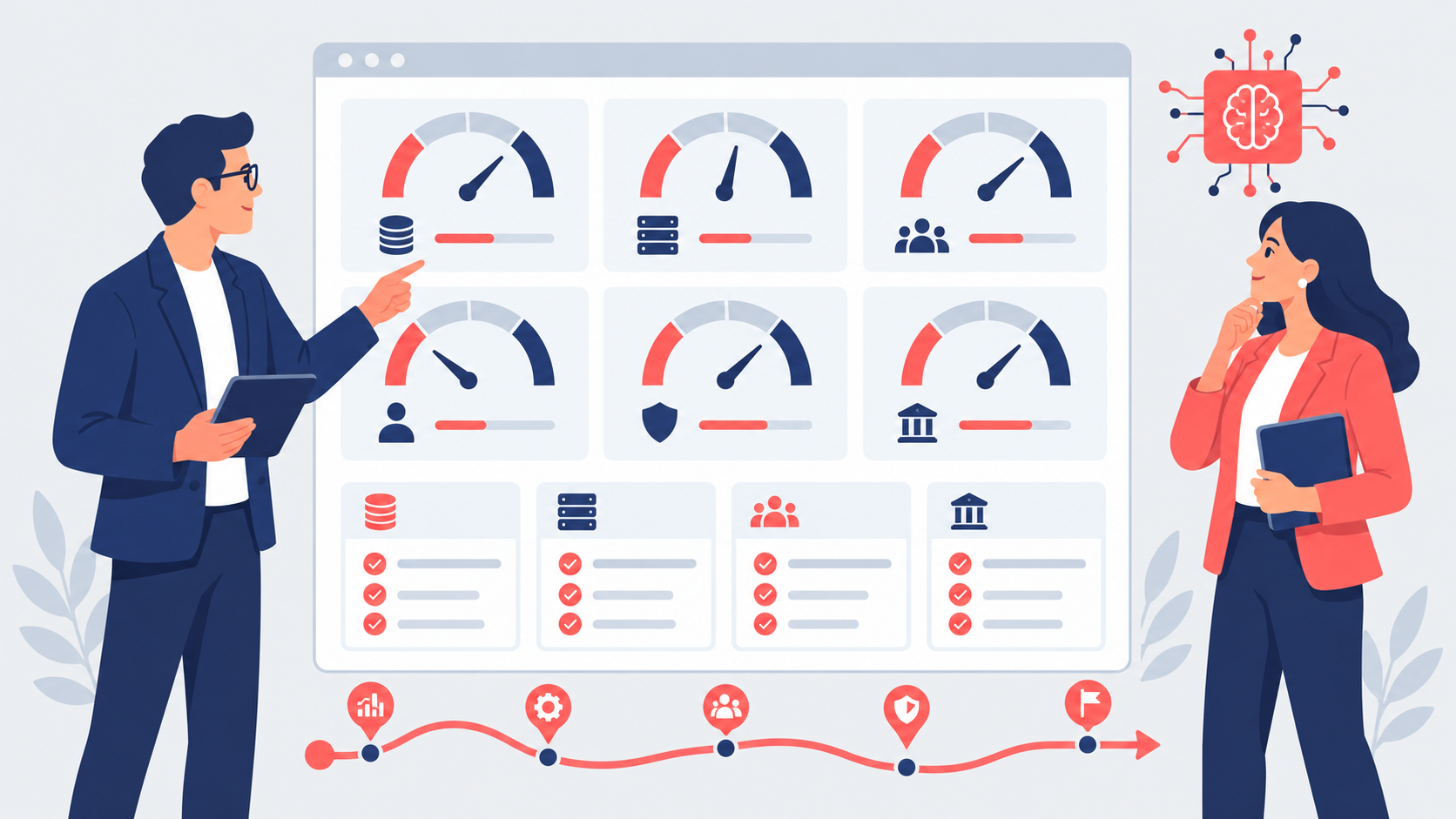
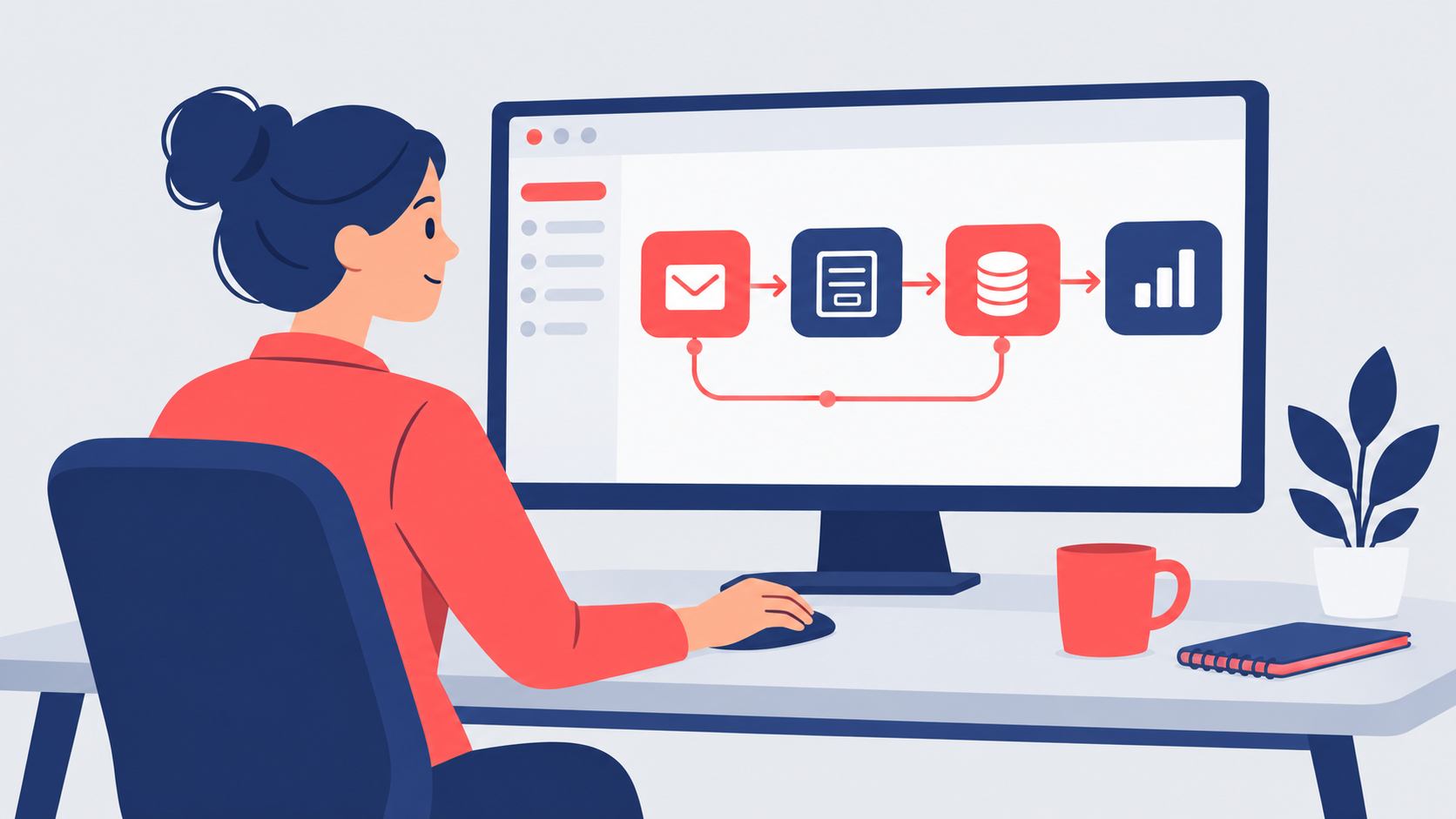
In practice it combines four things: data from machines, sensors and business systems; a model or AI tool that turns that data into a prediction or recommendation; integration with existing systems such as the ERP, MES or quality system; and changes to how people work so the recommendation is actually used. Most failed projects get the second part right and neglect the other three.
Wider business data shows how quickly adoption is moving. The Office for National Statistics reports that around 35% of UK businesses with 10 or more employees used at least one AI technology by June 2026, up from about 12% in September 2023. It also notes that manufacturers most commonly start with free-to-use software, which is fine for office tasks but rarely reaches the production line.
Where AI pays back first in UK manufacturing
The strongest early use cases are narrow, measurable and tied to a cost the board already tracks. These are the areas we see deliver first:
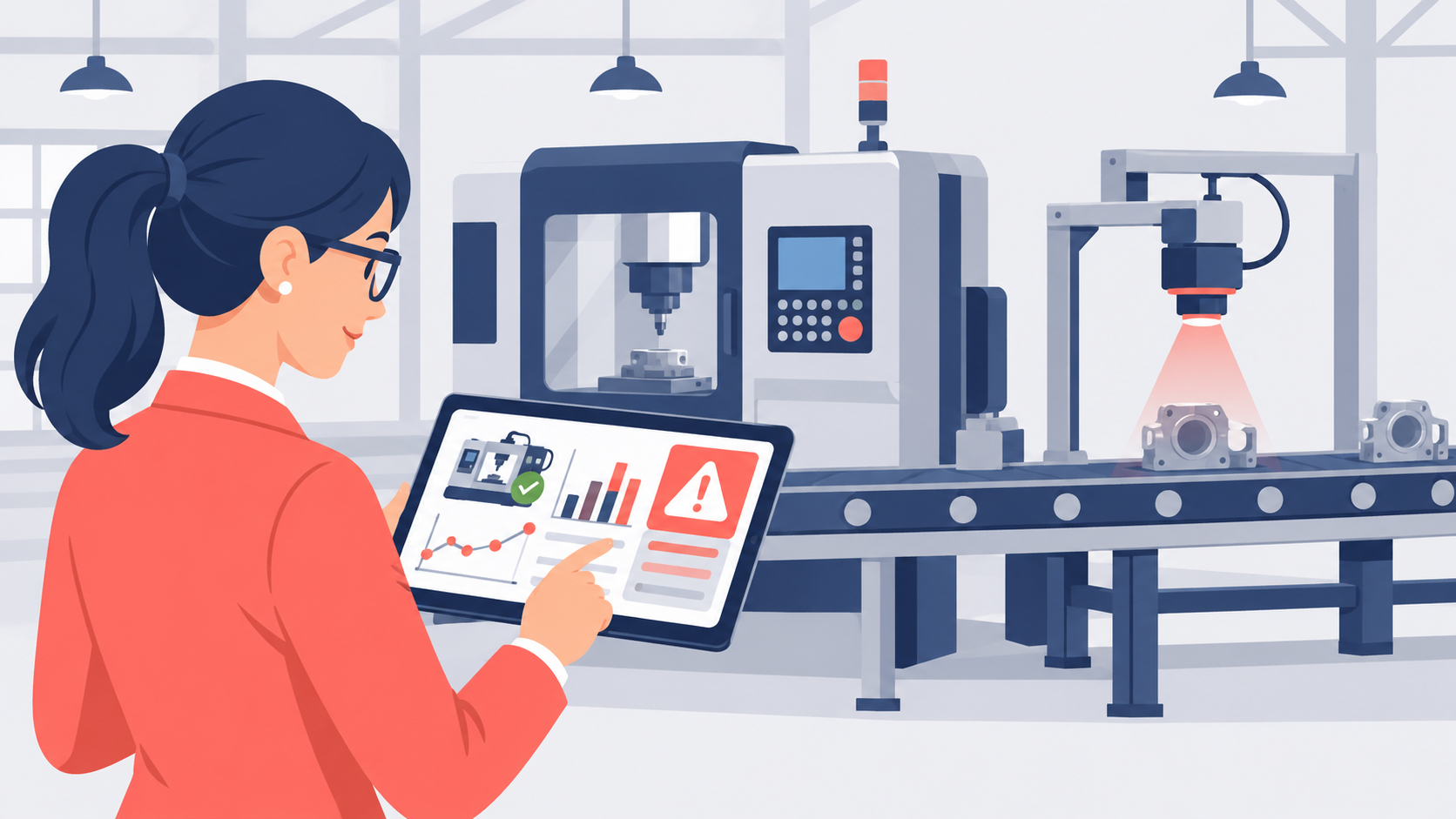
- Predictive maintenance: vibration, temperature and current data used to spot failing bearings, motors or tooling before they stop a line. See our glossary entry on predictive maintenance.
- Quality inspection: camera-based computer vision that finds surface defects, missing parts or labelling errors faster and more consistently than manual checks.
- Production scheduling: models that sequence jobs around changeovers, material availability and labour, improving overall equipment effectiveness.
- Quoting and estimating: AI that reads drawings and specifications and drafts a quote from past jobs, cutting turnaround from days to hours for engineered-to-order work.
- Demand and inventory planning: forecasts that combine order history and customer signals to reduce both stock-outs and excess raw material.
- Energy monitoring: identifying machines, shifts or processes that use more power than they should.
- Back-office tasks: purchase order matching, supplier emails and technical documentation, which are often the quickest wins of all.
How to start AI implementation on one line
The most reliable approach is to pick one line, one problem and one measure. Agree a baseline before anything changes, whether that is downtime hours, scrap rate, first-pass yield or quote turnaround. Then check the data: is it captured, is it trustworthy and can it be extracted from the machine or system without a major integration project? Older equipment can often be retrofitted with low-cost sensors.
Take a precision engineering business with 120 staff and two CNC cells that keep losing shifts to spindle failures. Rather than a plant-wide programme, it fits vibration and temperature sensors to the six machines with the worst history, runs a predictive maintenance pilot for 12 weeks, and compares unplanned stoppages with the previous year. If the pilot works, the maintenance team schedules interventions around the alerts and the model is rolled out to the next cell. If it does not, the business has spent a few months, not a capital budget, finding out.
Funding can reduce the risk further. Made Smarter offers free impartial advice, digital transformation planning and up to 50% match-funded grants for hardware and software to SME manufacturers in all nine English regions, with most regions capping grants at £20,000. Eligible businesses have 249 employees or fewer and turnover under £36 million or a balance sheet under £18 million. Our glossary entry on Made Smarter explains how it works.
Who should lead AI implementation?
AI projects in factories stall when nobody owns them. IT sees a data problem, operations sees a technology problem and finance sees an unproven cost. Somebody needs to connect the use case to the business plan, choose suppliers on evidence, keep integration with the ERP on track and make sure the shop floor trusts the output.
Few SMEs need a full-time chief AI officer to do that. A fractional data and AI director works a set number of days a month, typically from £1,795 to £5,000 per month, and brings experience of what has and has not worked in other plants. For a broader programme, our AI consultancy covers readiness, use case selection and supplier evaluation, and our manufacturing sector page shows how the Leadership Services bench supports manufacturers across finance, operations and IT.
How to choose an AI implementation partner for manufacturing
Whether you appoint a director, a consultancy or a technology supplier, look for these signals before you commit spend:
- Proven shop-floor experience, not just office or marketing AI projects.
- A clear view of your data before any promise about results.
- Independence from a single software vendor, so recommendations fit your plant.
- Realistic timescales: a well-scoped pilot should show results within three months.
- Attention to security when connecting machines to networks and cloud services.
- Transparent pricing with no long-term tie-in, so you can stop if the pilot fails.
Frequently asked questions
How much does AI implementation for manufacturing cost?
Which AI use case should a manufacturer start with?
Can AI work with older machines?
What is Made Smarter?
Do we need a chief AI officer?
Ready to put AI to work on your shop floor?
Leadership Services has a bench of 70+ senior directors, including data, AI and operations leaders who have delivered technology change in manufacturing businesses. They start within one week, from £1,795 per month, with no long-term tie-in.
Tell us about the problem you want to solve and we will reply the same working day. Book a call or get in touch.